Showing posts with label Ministers. Show all posts

Sunday, 10 February 2019

A loss of credibility and moral authority

Does anyone believe in credibility, competence or morality nowadays? Have social media and Trumpism so reduced us that it no longer matters whether you speak the truth - as opposed to fake news or alternative facts - and can no one take responsibility for something and have the honesty to admit when everything goes wrong on their watch, and then resign?

Ah, Lord Carrington, where are you now?

It will come as no surprise to hear that I think this government has lost all credibility and moral authority. Other countries see us as living through a mental breakdown of our own making: probably not far from the truth, harsh though the metaphor may be.

How can it be that all the main protagonists of Brexit have been tested, found wanting and resigned? Of the leading Brexiters, only Michael Gove, Andrea Leadsom and Chris Grayling, remain in the Cabinet. The variability of the former and the pointlessness of the second says it all. The performance of the last is covered below.

Surely, there has to come a point at which someone (brave) walks into Theresa May's office and says: Never mind the confidence of your MPs and Parliament: the government has lost the confidence of the country. You have to try a different tack.

A few cuttings from this week's media give one an idea of the state of the nation.

Brexit: sack Grayling over ferry fiasco, demand MPs - a Guardian headline after it was revealed that the mystical Seaborne Freight contract, in which none of us believed as they had no ferries, had been cancelled.

This came a few days after Chris Grayling was ridiculed by the Chairman of Calais Port
'The transport secretary, Chris Grayling, is no longer welcome in Calais, according to the port’s chairman, who has been angered by British plans to divert some sea traffic in the event of a no-deal Brexit. 
'Jean-Marc Puissesseau reportedly accused the UK cabinet minister of behaving in a “completely disrespectful” manner on Tuesday. “Mr Grayling came to us in November and asked us if we would be ready. We told him ‘yes’, though we did not know as much as we know today. He did not tell us that he wanted to reduce the activity [at Calais]. 
 '“It is not fair at all, it is completely disrespectful. I don’t want to see him again,” Puissesseau told the Daily Telegraph.'
One wonders how we are to get goods across the Straits of Dover in 50 days' time as this ferry link was apparently going to be the whizzo solution.

Mark Steel in The Independent focused on Donald Tusk's remark about the place in Hell for those who promoted Brexit without a plan - I won't bore you with the Sun's outburst on the same subject which were predictable and totally ignored the incredibly rude headlines they have used about Donald Tusk in the past:
'So Donald Tusk is being absolutely outrageous when he says the promoters of Brexit had “no plan”.
'The plan all along was for the first and then second negotiator to resign, for both to oppose the deal they negotiated, and the foreign secretary to resign, followed by half the cabinet, and for no one to have realised there would be a border with Ireland, and votes to be lost by record amounts, and for rehearsals for when 50,000 lorries are stuck in Kent and businesses to stockpile toilet rolls and insulin, and the government to be dependent on creationists, and plans made for the evacuation of the Queen until it could now be announced we’re in a customs union with The Jungle Book and all have to dance with bears, or Britain has been reclassified as a beehive and Arlene Foster is our queen.'
Well, he may overstate things when he comes to the Jungle Book but these fade into insignificance to this wonderful (anonymous piece which explains the Brexit process with staggering clarity:
David Cameron made a promise he didn’t think he’d have to keep to have a referendum he didn’t think he would lose. Boris Johnson decided to back the side he didn’t believe in because he didn’t think it would win. Then Gove, who said he wouldn’t run, did, and Boris who said he would run, said he wouldn’t, and Theresa May who didn’t vote for Brexit got the job of making it happen.
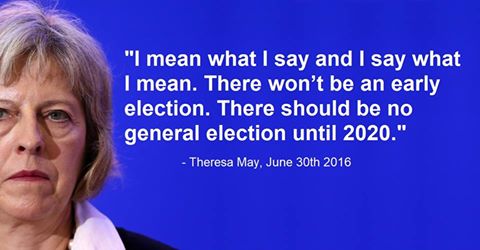
She called the election she said she wouldn’t and lost the majority David Cameron hadn’t expected to win in the first place. She triggered Article 50 when we didn’t need to and said we would talk about trade at the same time as the divorce deal and the EU said they wouldn’t so we didn’t.
People thought she wouldn’t get the divorce settled but she did, but only by agreeing to separate arrangements for Northern Ireland when she had promised the DUP she wouldn’t. Then the Cabinet agreed a deal but they hadn’t, and David Davis who was Brexit Secretary but wasn’t said it wasn’t what people had voted for and he couldn’t support what he had just supported and left.
Boris Johnson who hadn’t left then wished that he had and did, but it was a bit late for that. Dominic Raab become the new Brexit secretary. People thought Theresa May wouldn’t get a withdrawal agreement negotiated, but once she had they wished that she hadn’t, because hardly anybody liked it whether they wanted to leave or not.
Jacob Rees-Mogg kept threatening a vote of no confidence in her but not enough people were confident enough people would not have confidence in her to confidently call a no confidence vote. Dominic Raab said he hadn’t really been Brexit Secretary either and resigned, and somebody else took the job but it probably isn’t worth remembering who they are as they’re not really doing the job either as Olly Robbins is.
Then Theresa May said she would call a vote and didn’t, that she wouldn’t release some legal advice but had to, that she would get some concessions but didn’t, and got cross that Juncker was calling her nebulous when he wasn’t but probably should have been.
At some point Jacob Rees Mogg and others called a vote of no-confidence in her, which she won by promising to leave, so she can stay. But they said she had really lost it and should go, at the same time as saying that people who voted Leave knew what they were voting for which they couldn’t possibly have because we still don’t know now, and that we should leave the vote to Leave vote alone but have no confidence in the no-confidence vote which won by more.
The government also argued in court against us being able to say we didn’t want to leave after all but it turned out we could. May named a date for the vote on her agreement which nobody expected to pass, while pretending that no deal which nobody wants is still possible (even though we know we can just say we are not leaving), and that we can’t have a second referendum because having a democratic vote is undemocratic. And of course as expected she loses. Some people are talking about a managed no-deal which is not a deal but is not no-deal either.
Thank goodness for strong and stable government.

Monday, 4 February 2019

Knowing when to admit defeat

When given a novel and complex task, it can be difficult to admit that it is either beyond you or the task is undo-able.

I recall one such task which started with the CEO taking me to one side and saying 'The Chairman wants this done. X and Y have already had a go but he did not like working with them. You are my next hope.'

I should have known that the project was nigh impossible. My team was unsuited to the type of work and so I would have to lead from the front and learn new campaigning skills I did not have. What I had not realised was that the Chairman was wanting to re-create his youthful past, expecting a large and complex organisation to act like a light-footed start-up.

The lessons I learned were profound:
  • Know your skills and don't be flattered into taking a job for which you know you are unsuited, even if you are the last one standing. It may be the job that is wrong rather than the people
  • Make sure you have your constituency behind you and that they are not watching you from the wings, seeing you banging your head against a wall and thankful that they are not involved
  • The opposition can be your friend. My Chairman was more inclined to listen to the other big organisation involved rather than my organisation as they did not dare suggest that the project might be impossible
  • Know when to go back to those who gave you the job and admit that you cannot do it. It is better to be seen as honest about your own abilities than a 'failure' to be disposed of
It all ended in tears, as you can guess, and I became another person 'found wanting'. It was irrelevant that this said as much, if not more, about the Chairman than the people involved.

Theresa May could learn some of these lessons.

A run-of-the-mill middle-rank administrator, she is totally out of her depth with Brexit but, having been given the task, is determined to see it through at whatever cost to herself and the country. Like me, she is trying to achieve a big notch on her CV, fully expecting to walk away the moment the finishing line is crossed, satisfied that she could look at the badge 'She delivered Brexit' on television captions and her study wall, in her retirement.
  • She does not have the skills to lead and bring people together. Flattered to have achieved the top job almost by accident, she had to pretend to be an ardent Brexiter when she had campaigned on the other side 
  • Because she failed in those early stages, neither her party, nor the country, has ever been united behind her. The abortive election simply underlined this. She promised a new approach which never happened
  • She has singularly failed to engage with the 48% Remainers or the Opposition from the start (and is still not doing so in a meaningful way as she seems incapable of talking to anyone who did not vote Tory)
  • Now she is trying to push something through in the teeth of opposition from her party and the country and is refusing to go back to the people who gave her the brief and ask if they still mean it now that the reality is clear(er)
It is time for her to be honest, not to be pig-headedly stubborn: to check the brief with the client. Ken Clarke was right: she is a Bloody difficult women indeed.

What so many Prime Ministers do not see at the time, is that they will be reviled in retirement for not having listened properly and acted honestly when in office: just think of people like Thatcher (Poll Tax), Blair (Iraq War), Brown (Spending) and Cameron (the referendum) ... All of them could have done with a seriously large majority behind them before taking a politically risky step. May is just going to be one more entry on this list.

Sunday, 3 February 2019

How did we get here?

It is less than two months before we are due to leave the EU. Whether one agrees with the decision or not, it is almost impossible to understand the breath-taking incompetence of the journey, summed up by the fact that we will not know until 14 February (originally scheduled for October, then November, then December, then delayed until January ...) whether we will leave with a deal (the government's but not Parliament's preferred solution) or without one (abhorred by a majority in Parliament).

One can almost hear the headline-writers sharpening their pens for St Valentine's Night Massacre when the news of the vote comes in.

Any junior, middle or senior manager in business who left things this late would have been out on their ear long ago but the government is ploughing on as though the urgency were no more than where to go for one's late-booked skiing holiday.

We have less than two months to put in place a whole new border system and customs arrangements if we 'crash out'. Two months to pass a mountain of legislation which even Ministers now seeing as nigh impossible. By way of contrast, the patrol boats promised for the Straits of Dover still have not returned from the Mediterranean over two months ago.

Had we decided on 'no deal' two and a half years ago, the preparations might just about be ready by now.

The headlines report that riots will ensue if there is a hard Brexit, that the Queen will be evacuated, that people are stockpiling food, that decaying food will start piling up ... and this ignores the news coming out of business about investment being cut back and jobs being lost: little companies like Nissan, Airbus, Jaguar Land Rover have all warned of the danger of no deal - news that is stoutly denied on the basis of no apparent evidence by Brexiters.

All of which may well be Project Fear Mark VII (or is it VIII, IX or X?) but coming from the government spin doctors to get everyone to support their 'deal' which will ensure that nothing much changes for a couple of years (the 'Transition period') while we attempt the really difficult bit of agreeing a trade deal with the EU. Meanwhile, morale will continue to decline as the consequences of leaving become clearer by the day.

Talk about a decision taken in haste and repented at leisure.

Meanwhile, back in the Duchy, the Cornish MP George Eustace, the Minister of Agriculture and a former farmer - better known as George Useless locally - was explaining the benefits of leaving to a BBC Radio 4 audience. He reassured Cornish farmers that 'modelling had shown' that the price of lamb would go down while that of beef would go up. He was sure they would re-adjust, although he did not mention any help in doing so. And fishing would once more be under 'our' control and we could work out or own fishing policy.

So he has not yet worked out a fishing policy and yet we have voted to dive off the deep end in the hopes that a more successful one will emerge from somewhere.

And as for the previous EU grant of £60m to help Cornwall as a under-performing Region, George was coy. He made no commitment to replacing this directly (as Boris had done quite directly during the referendum campaign) and talked of some new 'partnership fund' which might mean that Cornwall got the money, or a bit less, or even more. I see pink pigs flying past the window.

The future of Cornwall's industry is to be beef farming and fishing. No mention of the EU-supported creative industries, of the EU-supported UK Spaceport. Um ... which century are you living in George? Have you thought of re-opening the mines so we can send small boys down them to keep them out of mischief?

Meanwhile, in order to stitch up her Plan B - or are we up to E yet? - the PM intends to 'visit' Brussels to be told yet again - I forget how many times they have already told her, often publicly and directly  - that they have no interest in re-negotiating the withdrawal agreement or the backstop which she herself suggested, while her whips try to bribe Labour MPs with promises of future investment (and we know how reliable such promises are, don't we George).

The blame game has started too. It will never be the Prophets of Brexit's fault that milk and honey does not appear to be flowing in abundance. It will because the rest of us failed to support their act of faith in the Divine, Mystical and all-Providing Unicorn. It will be everyone else's fault. They simply cannot face reality

The EU is accused of being intransigent when we are the ones wanting to leave. Apparently they are meant to adjust the rules of their club so that we can have 'the exact same benefits' as David Davis promised us.

Lord Digby Jones originally said that there would be no job losses from Brexit. In another recent BBC radio show he accepts that now there will be. This does not show that he was wrong when he said there would be none, purely that by failing to get behind the PM to support a policy with which they disagreed, parliamentary Remainers are responsible for the job losses. How on earth does that logic work?

Nissan is withdrawing a new model from its Sunderland works stating that uncertainty about Brexit has made them review their investment programme. Jacob Rees-Mogg's reaction is to claim that this has nothing to do with Brexit, despite Nissan's statement and claims that just-in-time delivery will go ahead unhindered, against the views of the car manufacturers. What does he know that the entire car industry does not? I wonder if he knows that Chris Grayling's friends have not got any ferries.

All of which shows that there is actually no plan, no unity: no national commitment to a single solution. It is horrific to think that a matter of such national importance might be decided by one MP, beguiled or duped by the offer of investment, an honour or 'favourable treatment' rather than, given the uncertainty and lack of clarity, by a super-majority of the British people.

What a stinking, horrible mess. What incompetence. Heaven help us all.

Monday, 28 January 2019

You could start by saying sorry

It started with the news that Cathay Pacific had sold £12,450 Business Class tickets for a Hong Kong to Lisbon flight at Economy Class prices: £1,175 by mistake. We all laughed at the idea but it sparked a thought: why would anyone pay 10 times the economy price to fly on this journey. The beds? The food? The peace and quiet? The space? By contrast, the First Class cost is 20 times the Economy one.

Yes, we all know that the high fares in the front of the plane help to reduce the costs for those of us in the back. If airlines flew with only one class then we would all be complaining. But who has this sort of money and what do they really want?

The Swedes have long recognised that a country or business at ease with itself is one where the most well-off receive no more than 20 times the salary of the least well paid. So, they might argue, Cathay Pacific's prices reflect this. The First Class passenger can be separated from the Economy one on the basis of price.

That 20 times multiple salary ceiling was broken in the UK long ago. As Polly Toynbee recently remarked, inequality shot through the roof in the 1980s and the distance between the 'haves' and the 'have nots' - or 'just about managing' in modern parlance - has continued to widen. Cedric Brown of British Gas fame was awarded a salary of £475,000 (plus a bonus of £600,000) in 1995: 47 times that of his average employee. Now FTSE 100 CEOs now regularly earn £4m a year (with/without bonuses) when salaries have been frozen of pushed down for the vast majority.

The world's 26 richest people now own as much as the poorest 50%. What a terrible condemnation of our world that we should have allowed such an imbalance.

Trickle down economics - keeping taxes low for the super rich and encouraging them to splash their cash to create jobs for the less well off - has not worked. Research shows that they simply add the benefit to their wealth.

Our local newsfeed reports that the number of paupers' funerals has doubled in recent years: 77 people in Cornwall could not afford a funeral in 2017/18. The difference between those Business Class and Economy class fares on Cathay Pacific would have paid for a decent funeral for at least three of those 77: the First Class fare would have paid for more than 6. Can we not even say goodbye to people with dignity?

You do not have to be steeped in left-wing propaganda, watch Ken Loach's I Daniel Blake or Jimmy McGovern's excellent Care on the BBC to be concerned about how the 'other half'' are treated: actually, if the figures above are to be believed, it is a lot more than half. Those films have done what Brassed Off did for a previous generation showing we have learned nothing in the interim.

Jobs advertised today across Cornwall suggest salaries of around £20k for responsible sounding jobs which are well above the capabilities of a person prepared to accept the 'minimum wage'. How do you bring up a family on a salary like that? How do you even begin to contemplate putting aside some money for the deposit on a house? Even the smallest affordable house is going to cost well over 20 times that salary, way beyond anything a mortgage company might consider.

People taking these jobs are not 'failures' that can be despised by Tory politicians. They are not relying on the state (the biggest Tory crime) They are decent people wanting decent jobs to help them live a decent life. They are, or will be, taxpayers. To precis Daniel Blake, they are not numbers, customers or service users: they are citizens. They are voters.

Thankfully, some Tory MPs are beginning to notice. Heidi Allen is on a tour of England with Labour MP Frank Field, looking at some of the most deprived areas. I've absolutely had enough she says, all too aware that her party's policies have caused problems. Will it make any difference? Will her experiences feed back into the Westminster policy bubble? I somehow doubt it.

The People's Vote people are trying to find emotional slogans that will resonate with people if we are actually allowed a second referendum on Brexit: something that will counter the We told them the first time, now tell them again: the vacuous, argument-free, thuggish slogan of the Leavers.

We all know that, amongst many people up and down the country, the original Brexit vote was a protest vote about austerity, about the centralisation of power in Westminster, about the easy life of the 'haves' in the South East, paying themselves eye-watering salaries, about the fact that 'the City' had carried on as though austerity had never happened.

The People's Vote campaigners have nothing to apologise for as they were not responsible for the failings of government over the years, but they could embarrass Parliament into an apology: into saying 'sorry'.
  • Sorry for the easy win of blaming the EU for things that were all the time within the control of the government
  • Sorry for wasting time on Brexit when they should have been doing something about the issues which we really face, which would really improve people's lives (rather than pandering to a pampered, over-wealthy elite)
  • Sorry that economic trickle-down has failed and agreeing to do something serious about limiting fat cat salaries and insultingly large bonuses (a commitment made by the PM when she took office but which has sunk without trace) 
  • Sorry that so many wealthy people were managing to avoid tax through the use of off-shore accounts when 'the people' were being screwed
  • Sorry that salaries for the few had been allowed to mushroom way beyond anything realistic
  • Sorry that austerity has been applied so unfairly
  • Sorry for incentivising cost reduction: imagining that everything can be done to the same standards on less money, and enriching the wealthy on the proceeds
  • Sorry that the social services system has been unable to cope and for managing them so inadequately with insensitive, unfair and ill-thought through procedures
  • Sorry for constantly tinkering with, and under-funding vital public services like the NHS and Education 
  • Sorry that there has been a need for food banks to become a main source of nourishment for so many people
  • Sorry that Westminster has so concentrated power in the country, cutting budgets for local authorities and seizing all their powers of decision-making
  • Sorry that the party political system has so signally failed to provide a country at ease with itself or any sense of representation for more than half the population
And, sorry, yes sorry, that we have created a society in which no one seems to turn a hair at the moral paradox that some people can afford a First Class fare on an airline when others are visiting food banks just to survive. As Thatcher might have said: if you are still travelling Economy then you have not been successful.

No MP has ever wanted to say sorry. They will avoid questions, offer fake news, twist the truth: anything to avoid the need to say that they got something wrong. They believe they are required to be omniscient and omni-competent. To apologise or admit fault would lead inexorably to the need to resign. It would fail every test they falsely set themselves. 

'Sorry' is not an easy word but it might start a new debate in the country and might do more to bring the country back together than any infighting winner-takes-all self-centred fighting in the adversarial bearpit that is our Parliament.

One can live in hope.

Sunday, 13 January 2019

The (Brexit) debate rumbles on

Having delayed her 'meaningful vote' from before Christmas  into January because she was convinced she would lose it, Theresa May now faces the music on Tuesday 15 May.

A last desperate scramble for votes is taking place. To what end, we cannot know.

She threatens that to reject her deal will be 'bad faith' with the British people. Methinks she doth protest too much. Setting aside the fact that a majority of the British people did not actually vote to leave the EU, the vote actually said 'leave the EU' it did not say 'Leave the EU by St Theresa's deal'. There are lots of other ways of leaving the EU other than through her miserable deal.

The Norway model is back on the agenda. I wonder how long it will take for someone to point out that this will only give us control of fishing and agriculture and so far we have no idea what we want to do with either. We would be in the single market and customs union and would have to accept free movement (except in very exceptional circumstances); we would have no say in EU regulations and would thus be 'rule-takers.'. So much for 'taking back control'.

Meanwhile, the redoubtable Grayling says that we must do what the right wing yobs say or they will get really cross and riot. It is good to have someone like this in charge of appeasement.

As a little coda to his ferry fiasco, enjoy the attached grilling of one of his Ministers. There is nothing like a QC for being dogged and asking the same question three times.

In the debate in the House of Commons, David Lammy summed up his objections to Brexit.  

... We have a duty to tell our constituents the truth. Even when they passionately disagree.

We owe to them not only our “industry” but also our “judgement.”

We are trusted representatives, not unthinking delegates.

So why do many in this House continue to support Brexit, when they know it will wreck jobs, the NHS and our standing in the world?

This is the fundamental dishonesty at the heart of the Brexit debate.

Most MPs now recognise it in private, but do not say it in public.

Brexit is a con:
  • A trick. A swindle. A fraud.
  • A deception that will hurt most those people it promised to help.
  • A dangerous fantasy which will make every problem it claims to solve worse.
  • A campaign won on false promises and lies.
Vote Leave and Leave.EU both broke the law.

Russian interference is beyond reasonable doubt.

And by now every single campaign promise made in 2016 has come unstuck.

Brexit will not enrich our NHS - it will impoverish it.

A trade deal with Donald Trump will see US corporations privatise and dismantle the NHS one bed at a time.

And even those promises on immigration – which has so greatly enriched our country – are a lie.

After Brexit immigration will go up, not down.

When we enter negotiations with countries like India and China, they will ask for three things. Visas. Visas. And more visas. And they will get them because we will be weak.

Then there’s the myth about restoring parliamentary sovereignty. The last two years have shown what a joke that is.
  • The Prime Minister has hoarded power like a deluded 21st century Henry the Eighth.
  • Impact assessments have been hidden. Votes resisted and blocked. Simple opponents of a government policy bullied and threatened to get into line.
  • Even when we forced this meaningful vote, the Prime Minister cancelled it, certain we would reject her disastrous deal. And oh we will reject it. Because this is a Lose-Lose compromise, which offers no certainty for our future.
All it guarantees is more years of negotiation – headed by the same clowns who guided us into this farce in the first place.

--

Mr Speaker, we are suffering from a crisis of leadership in our hour of need.

This country’s greatest moments came when we showed courage, not when we appeased.
  • The courage of Wilberforce to emancipate the slaves, against the anger of the British ruling class.
  • The courage of Winston Churchill to declare war on Hitler, against the appeasers in his cabinet and the country.
  • The courage of Atlee and Bevan to nationalise the health service -- against the doctors who protested it was not right.
Today we must be bold, because the challenges we face are just as extreme.

We must not be afraid to tell the truth to those who do not agree.

--

Friends on this side of the house tell me to appease Labour voters in industrial towns. The former miners, the factory workers, those who feel they have been left behind.

I say we must not patronise them with cowardice. Let’s tell them the truth.

“You were sold a lie.

Parts of the media used your fears to sell papers and boost viewing figures.

Nigel Farage and Boris Johnson exploited the same prejudice to win votes.

Shame on them.

Immigrants have not taken your jobs. Our schools and colleges failed to give you skills.

Hospitals are not crumbling because of health tourists, but because a decade of austerity ground them down to the bone.

You cannot afford a house because both parties failed to build -- not because Mohammed down the road who moved in.

And wealth was hoarded in London - when it should have been shared across the country.

Blame us, blame Westminster. Do not blame Brussels for our own country’s mistakes.

And do not be angry at us for telling you the truth.

Be angry at the chancers who sold you a lie.

--

As Martin Luther King said long ago “There comes a time when silence is betrayal.”

So just as I speak plainly to the government this time around, let me also speak to the opposition about some home truths.

There is no left-wing justification for Brexit.

Ditching workers’ rights, social protections, and ending environmental cooperation is not progressive. This is a project about neoliberal deregulation. It is Thatcherism on steroids, pushed by her modern day disciples.

Leaving the EU will not free us from the injustices of global capitalism, it will make us subordinate to Trump’s US.

Socialism confined to one country will not work.

Whether you like it or not, the world we live in is global.

We can only fix the rigged system if we cooperate across border-lines.

The party of Keir Hardie has always been International.

We must not let down our young supporters by failing to stand with them on the biggest issue of our lives.

If we remain in the EU, we can reform it from the top table.

Share the load of mass migration, address excesses of the bureaucracy, and fix the inequalities between creditor and debtors.

We can recharge the economy.

We can re-fuel the NHS.

We can build the houses we need, after years of hurt.

Hope is what we need.

Remain in the EU.

Give Britain a second opportunity to decide.

Sadly, there were few MPs around to hear him as they simply could be bothered and had gone home for the weekend.

Thursday, 3 January 2019

A Happy New Year?

It is always good to start the year with some good uplifting news and this has been no exception.

With the Prime Minister's deal likely to appear before the House of Commons in a week's time, Pravda has been in full flow, trying to convince us that a 'no deal' would be a disaster so that we all roll over and buy her deal. We are warned there are more messages to come in the next few days.

Meanwhile, with the PM now on borrowed time, it has been fun watching the leadership contenders all trying to stake out their claims to be 'the chosen one' to succeed her. The vanity of Ministers knows no bounds and many have been keen to show they are 'back at their desks', 'being active' or 'making an announcement' (generally ill-thought through). It gets them brownie points at No 10 and with the faithful. Needless to say they have mostly fallen over in the process.

Jeremy Hunt has been off to Singapore: oh the advantages of being the Foreign Secretary and therefore being allowed to travel whenever/wherever you want. Boris missed an important Heathrow vote using precisely the same trick.

His message was that the UK could become another Singapore: a view which was rather spoiled by the Prime Minister of Singapore who said their model would not work for the UK.

One suspects that the residents of Hartlepool and Bournemouth would agree with the Prime Minister if they saw the conditions in which people live, and looked into the political structure of Singapore: We decide what is right, no matter what the people think. Yes, that is just what Brexiters want.

He was keen to tell us that Britain's role after Brexit should be as an invisible chain linking together the democracies of the world ... yatter, yatter. What on earth is this meant to mean? Has he asked them if they wish to be bound by an invisible chain or has he been reading too much Harry Potter with his mince pies?

Gavin Williamson has been throwing his diminished weight around by suggesting that we could open military bases around the world. Why? Oh yes, we used to have them back when we had an empire.

Um, Gavin, the armed forces are way under strength and much smaller than they were in the past. Heavens, we cannot rustle up enough patrol vessels to manage the straits of Dover.

Has he even checked that the host countries want us?

Sajid Javid has been the most prominent, boldly cancelling his 'luxury safari holiday in a £800 a night lodge' in order to be seen managing the 'migrant' 'crisis' (it was neither) with 'swarms' (well a few) people trying to cross the straits of Dover in small boats.

Having played all the 'right tunes' to the Torygraph faithful, including questioning whether they were genuine asylum seekers anyway, he was then taken to task by the 'liberal elite' who pointed out that under international law he should not pre-judge their status.

He was also taken to task for suggesting that the way to manage migration was by working closely with European partners: precisely the people from who we were about to cut ourselves off and who would no longer have an EU duty to co-operate.

'Bold action' followed with two vessels being withdrawn from the Mediterranean where they were dealing with large numbers of boats, to bolster the defence of the homeland. It will take one of them several weeks to arrive by which time the 'crisis' will be over. What price it never actually bothers to return? The media will have moved on long before it gets here.

It did not take long for headlines to emerge suggesting that Javid and Williamson were scoring points off each other.

I suppose we should be grateful that Caroline Nokes was not left in charge.

The star of the show, as usual, has been Chris Grayling. He had two strings to his bow. He blamed the unions for the 3.1% rail price rises. Um, Chris, that sounds so terribly 1970s and how would you feel if you had been squeezed by the government into having no pay rise for years and then, when you did get one (perish the thought), the government blamed you for the price rises.

And after a year when he had manifestly cocked up the whole rail system with a series of gaffes like changing the national rail timetable and forgiving a whole host of franchisees who were patently incapable of running a railway.

Trains are still not arriving or departing on time and there are suggestions that the ones that do appear will soon be running at 200% capacity. Yes, I know the London Undergound does, but that is for short journeys, not for five and six hour ones.

But this was simply a warm-up to his explanation as to why he let a contract to a 'ferry company' that had no money, no ferries and had never actually done anything in its short life.

Only later did it emerge that the company's terms and conditions were copied and pasted from a pizza delivery company's website. And Grayling re-assured us that the 'due diligence has been thorough'.

But we can relax as he has also assured us that he is expecting the channel ports to operate normally in all Brexit circumstances. So that's all right then. There is no need to believe the government's own warnings about turning the M20 into a lorry park. JR-M was right that unicorns can nod lorries through in 6 seconds.

Honourable mentions should go to Matt Hancock who is something to do with Health who has been claiming that the NHS will be the best place in the world to have a baby. We have some way to go, apparently but that does not stop a Minister making a bold claim (with no money attached).

If we are the best place in the world to have a baby, might that not just lead to a greater demand for migration?

And to James Brokenshire, our worthy Minister for Housing, Communities and Local Government, for so diddling the figures that the £17m extra promised to Cornwall by central government will not actually be coming to Cornwall at all but will have to be provided by Cornwall Council.

It is so good to know the government of the country is in strong, stable, safe and reliable hands.


Tuesday, 27 November 2018

A fragile democracy

It is not often that I agree with my MP - certainly not recently - but I was pleased to be able to agree with her comment in a recent email: I greatly value democracy and understand how fragile it is. 

Yes, democracy is fragile. We have heard much about it recently, usually from people using as a hammer to beat others into submission: We voted out, get over it: that is how democracy works.

But are the rules of democracy written down or are they, like most things in the UK, based on sound British common sense: something we all took in with our mothers' milk?

One dictionary defines it as the belief in freedom and equality between people, or a system of government based on this belief, in which power is either held by elected representatives or directly by the people themselves.

The drafting of this is good as it starts with people and their freedom and equality, not simply with the mechanism. It also includes the word 'belief' suggesting that democracy is not a set of rules but comes from an attitude.

The Brits delight in boasting that we 'invented' modern parliamentary democracy: a boast that is probably as thin as many of our other claims to pre-eminence. It is simply one of those boasts used to underpin British exceptionalism. 

But how do I reconcile my MP's views with what is going on now?

A referendum was held with a binary question so, for once, we were asked what we wanted on a specific question (let's set aside the lies, confused messages and dissembling that the campaign involved). We apparently said what we wanted.

The government of the day has then studiously ignored the views of the people thereafter - despite strong evidence that those views have changed - putting words into our mouths whenever necessary. It is what the people voted for is a useful refrain when there was only one actual question: I don't remember migrants, sovereignty or trade deals with dubious regimes being mentioned on the ballot paper.

It also refuses to consult with the people again. How can this be right?

Either we are a representative democracy - power held by elected representatives - or we are a Swiss democracy with the major issues being decided by the populace. It appears we live in a halfway house: we will ask you when you are likely to give the right answer, otherwise we will just get on with things and ignore your views.

In two weeks time, MPs will vote on the Prime Minister's withdrawal deal. Currently, its future looks bleak and so she has gone over MPs' heads to write a letter to all of us (or, more likely to Tory supporters).

Why bother? We have no power. She has told us that decisions will be taken by our representatives. All we can do is tell our MPs what we think and mine does not seem prepared to listen or debate the issues.

Meanwhile, the whips will start the usual arm-twisting, cajoling, bribery - offers of knighthoods, peerages, promotions, parliamentary time - and use of 'the little black book' to get MPs to fall into line behind the PM. As Giles Brandreth, a former whip, said on the Today programme there are always toilets into which MPs can be locked if they look likely to turn the wrong way.

Is this really the best way to run a democracy? I have argued before that we have a C19 parliamentary system which is long past its sell-buy date. If the PM's withdrawal deal goes through then we will not only have undermined the future for our young but any credibility as a successful democracy: how to manipulate a democracy perhaps but run one, no.


Monday, 12 November 2018

Populists from another age?

Writing about the Russian Revolution in Natasha's Dance, Orlando Figes says:

'Popularly seen as a war against all privilege, the practical ideology of the Russian Revolution owed less to Marx - whose works were hardly known by the semi-literate masses - than to the egalitarian customs and utopian yearnings of the peasantry. Long before it was written down by Marx, the Russian people had lived by the idea that surplus wealth was immoral, all property was theft, and that normal labour was the only true source of value.

'By giving institutional form to this crusade, the Bolsheviks were able to draw on the revolutionary energies of those numerous elements among the poor who derived satisfaction from seeing the rich and mighty destroyed, regardless of whether such destruction brought about any improvement to their own lot.' ... which we now know it did not.


Saturday, 10 November 2018

Current heroes?

The list of political heroes has just increased by one: Jo Johnson for his incredibly well-crafted resignation letter (see below). He can now take his place alongside Anna Soubry, Dominic Grieve, Keir Starmer, Nicky Morgan and others who still seem to have retained a degree of independent spirit.

Then there are non MPs like Simon Coveney (the 'Foreign Minister' of Ireland) who seems incapable of opening his mouth without making sense, Seb Dance (MEP Labour) whose quiet good sense is equally admirable and almost any non-British journalist writing for a leading newspaper or magazine. such as Jan Fleischhauer with his piece Britain has never looked so foolish in the world’s eyes.

Could it be that we are seeing the beginnings of a central grouping which might form the core of the coalition that will follow Theresa May's inevitable resignation when her deal is rejected? The relentless logic of Brexit points to this as the inevitable solution.

Anyway, to Jo Johnson. Read and enjoy:

Why I cannot support the Government’s proposed Brexit deal

Brexit has divided the country. It has divided political parties. And it has divided families too. Although I voted Remain, I have desperately wanted the Government, in which I have been proud to serve, to make a success of Brexit: to reunite our country, our party and, yes, my family too. At times, I believed this was possible. That’s why I voted to start the Article 50 process and for two years have backed the Prime Minister in her efforts to secure the best deal for the country. But it has become increasingly clear to me that the Withdrawal Agreement, which is being finalised in Brussels and Whitehall even as I write, will be a terrible mistake.

Indeed, the choice being presented to the British people is no choice at all. The first option is the one the Government is proposing: an agreement that will leave our country economically weakened, with no say in the EU rules it must follow and years of uncertainty for business. The second option is a “no deal” Brexit that I know as a Transport Minister will inflict untold damage on our nation. To present the nation with a choice between two deeply unattractive outcomes, vassalage and chaos, is a failure of British statecraft on a scale unseen since the Suez crisis. My constituents in Orpington deserve better than this from their Government.

What is now being proposed won’t be anything like what was promised two years ago.

Hopes for “the easiest trade deal in history” have proved to be delusions. Contrary to promises, there is in fact no deal at all on our future trading relationship with the EU which the government can present to the country. Still less anything that offers the “exact same benefits” as the Single Market, as David Davis promised, or the “precise guarantees of frictionless trade” that the Prime Minister assured us would be available. All that is now being finalised is the agreement to pay the EU tens of billions of pounds. All that may be on offer on trade is the potential for an agreement to stay in a temporary customs arrangement while we discuss the possibility of an EU trade deal that all experience shows will take many years to negotiate.

Even if we eventually secure a customs arrangement for trade in goods, it will be bad news for the service sector — for firms in finance, in IT, in communications and digital technology. Maintaining access to EU markets for goods is important, but we are fundamentally a services economy. Many in Orpington, for example, are among the two million Britons employed in financial services, commuting into the centre of London to jobs of all kinds in the City. Countries across the world go to great lengths to attract financial and professional services jobs from our shores. An agreement that sharply reduces access to EU markets for financial services — or leaves us vulnerable to regulatory change over which we will have no influence — will hurt my constituents and damage one of our most successful sectors.

While we wait to negotiate trading terms, the rules of the game will be set solely by the EU. Britain will lose its seat at the table and its ability to amend or vote down rules it opposes. Instead of Britain “taking back control”, we will cede control to other European countries. This democratic deficit inherent in the Prime Minister’s proposal is a travesty of Brexit. When we were told Brexit meant taking back powers for Parliament, no one told my constituents this meant the French parliament and the German parliament, not our own. In these circumstances, we must ask what we are achieving. William Hague once described the goal of Conservative policy as being “in Europe, but not run by Europe”. The government’s proposals will see us out of Europe, yet run by Europe, bound by rules which we will have lost a hand in shaping.

Worse still, there is no real clarity about how this situation will ever end. The proposed Withdrawal Agreement parks many of the biggest issues about our future relationship with Europe into a boundless transitionary period. This is a con on the British people: there is no evidence that the kind of Brexit that we’ve failed to negotiate while we are still members can be magically agreed once the UK has lost its seat at the table. The leverage we have as a full member of the EU will have gone. We will be in a far worse negotiating position than we are today. And we will have still failed to resolve the fundamental questions that are ramping up uncertainties for businesses and stopping them investing for the future.

My brother Boris, who led the leave campaign, is as unhappy with the Government’s proposals as I am. Indeed he recently observed that the proposed arrangements were “substantially worse than staying in the EU”. On that he is unquestionably right. If these negotiations have achieved little else, they have at least united us in fraternal dismay.

The argument that the government will present for the Withdrawal Agreement ‘deal’ is not that it is better for Britain than our current membership. The Prime Minister knows that she cannot honestly make the claim that the deal is an improvement on Britain’s current arrangements with the EU and, to her credit, refuses to do so. The only case she can try to make is that it is better than the alternative of leaving the EU with no deal at all.

Certainly, I know from my own work at the Department of Transport the potential chaos that will follow a “no deal” Brexit. It will cause disruption, delay and deep damage to our economy. There are real questions about how we will be able to guarantee access to fresh food and medicine if the crucial Dover-Calais trade route is clogged up. The government may have to take control of prioritising which lorries and which goods are allowed in and out of the country, an extraordinary and surely unworkable intervention for a government in an advanced capitalist economy. The prospect of Kent becoming the Lorry Park of England is very real in a no deal scenario. Orpington residents bordering Kent face disruption from plans to use the nearby M26, connecting the M25 to the M20, as an additional queuing area for heavy goods vehicles backed up all the way from the channel ports. This prospect alone would be a resigning matter for me as a constituency MP, but it is just a facet of a far greater problem facing the nation.

Yet for all its challenges and for all the real pain it would cause us as we adapt to new barriers to trade with our biggest market, we can ultimately survive these difficulties. I believe it would be a grave mistake for the government to ram through this deal by once again unleashing Project Fear. A “no deal” outcome of this sort may well be better than the never ending purgatory the Prime Minister is offering the country. But my message to my brother and to all Leave campaigners is that inflicting such serious economic and political harm on the country will leave an indelible impression of incompetence in the minds of the public. It cannot be what you wanted nor did the 2016 referendum provide any mandate for it.

Given that the reality of Brexit has turned out to be so far from what was once promised, the democratic thing to do is to give the public the final say. This would not be about re-running the 2016 referendum, but about asking people whether they want to go ahead with Brexit now that we know the deal that is actually available to us, whether we should leave without any deal at all or whether people on balance would rather stick with the deal we already have inside the European Union.

To those who say that is an affront to democracy given the 2016 result, I ask this. Is it more democratic to rely on a three year old vote based on what an idealised Brexit might offer, or to have a vote based on what we know it does actually entail?

A majority of Orpington voters chose to leave the EU in 2016 and many of the close friends I have there, among them hard-working local Conservative Party members, are passionately pro-Brexit. I respect their position. But I know from meetings I have had with local members that many are as dismayed as me by the course of negotiations and about the actual choice now on offer. Two and a half years on, the practical Brexit options are now clear and the public should be asked to choose between the different paths facing our country: we will all have different positions on that choice, but I think many in my local party, in the Orpington constituency and around the country would welcome having the last word on the Government’s Brexit proposals.

Britain stands on the brink of the greatest crisis since the Second World War. My loyalty to my party is undimmed. I have never rebelled on any issue before now. But my duty to my constituents and our great nation has forced me to act. I have today written to the Prime Minister asking her to accept my resignation from the Government. It is now my intention to vote against this Withdrawal Agreement. I reject this false choice between the PM’s deal and “no deal” chaos. On this most crucial of questions, I believe it is entirely right to go back to the people and ask them to confirm their decision to leave the EU and, if they choose to do that, to give them the final say on whether we leave with the Prime Minister’s deal or without it.

Wednesday, 7 November 2018

The televised interview

We have had a masterclass this week on how (not) to avoid a car crash when faced with a difficult interview.

Aaron Banks should never have been invited onto the Andrew Marr Show when his case had recently been passed to the NCA. As Caroline Lucas remarked, it might well have prejudiced his ability to get a fair trial. He would be delighted with this of course.

The interview was not Andrew Marr's greatest moment. He is not a Paxman who can ask the same question 13 times, nor is he an accountant. Banks said nothing and dodged every question, merely trotting out the old populist lines that everyone is corrupt (except him of course).

But then we had the hapless Caroline Nokes, Minister of State for Immigration: not once but twice.

Her appearance before the Home Affairs Committee chaired by Yvette Cooper was a simple car crash which reduced Yvette Cooper to putting her head in her hands. Dramatic stuff indeed.

OK, let's give the Minister the benefit of the doubt: she was up against a seasoned parliamentary performer from the other side. Her performance required her boss, the Home Secretary, to issue all sorts of 'clarifications' to try to rescue things.

Caroline Nokes has form. Back in May she appeared before the Norther Ireland Committee and was completely at sea.

One of the joys of these three examples is the style of the questioner: Andrew Marr was considered and adult (but did not get the truth); Yvette Cooper was precise, direct and dramatic.

I love the last one for its gently spoken approach:
'The Government tells us that it puts great store by the Good Friday Agreement. Have you actually read the Good Friday Agreement whose 20th birthday we have been celebrating?'
'No.'
'Have you read any part of it?'
'No. Twenty years ago I was having a baby. I have only been a Minister for five months.'
Ouch! It is not always best to have heavy feet to make one's point.

How do people face themselves in the mirror after sessions like this? Aaron Banks is arrogant to think he had 'won' (cf Trump and the Mid-term elections). When Tracey Crouch disagreed with a policy announcement, she resigned. Caroline Nokes clearly does not think it necessary after two car crashes.


Tuesday, 6 November 2018

And the plan is ... ?

Laura Kuenssberg reports on the BBC website today that Theresa May was at a Monday night reception in Westminster and talked about how, 'in her view, Brexit gives the government a big chance to reform the country'.

Interesting to hear but exactly how is the country 'going to be reformed' and are we allowed a say in what this might be?

The sad state of politics today is such that everything has now been reduced to a soundbite.

Did any one actually read and consider the Tory manifesto before voting in the general election? Did our revered Prime Minister go out on the stump spelling out the way in which she believed that the country could or should be 'reformed'? Was there any sort of 'debate' about her vision of a newly reformed country?

No, of course not. All we got was a repeat, and repeat and ... of 'Strong and Stable'. Is that how we plan our futures nowadays?

So where's the plan?
  • There was no plan for Brexit before the referendum.
  • No plan for Brexit was shared with the public after Brexit (was there one to share?)
  • David Davis lied his way through the 58 sectoral analyses which were the basis for his negotiating plan.
  • 'Chequers' - the nearest thing to a plan that has appeared, was shot out of the water by the EU's first salvo.
Now, apparently the country is going to be reformed. How? Why? Where's the plan.

No competent business would operate like this. Why do we accept it from our government?


Monday, 5 November 2018

Finding some soldiers

So we are going to take back control of our borders and ensure that only 'highly qualified' people who are able to command salaries over £50,000 pa will be allowed in unless there are special shortages ...

... like soldiers apparently.

Commonwealth residents will now be allowed to join the military without having first lived in the UK for five years.

Will they be given residency? How will this affect the immigration figures?

Wasn't it the Roman empire that fell to pieces when all its forces were staffed by mercenaries?

Sunday, 4 November 2018

Back in business


We have been silent for far too long: overwhelmed by the sheer horror of the way the world has been moving. Trump in the USA who does not seem to know anything about truth, decency, morality, equality, kindness, thoughtfulness ... Brazil who seem to have elected a look-alike. 

And our own government flailing around like demented cats, unable to listen to any contrary opinions and ploughing on, dropping ministers on a weekly basis, as though they had a divine right to dictate. We have lost count of the number of times we have been told 'I am perfectly clear' and 'not in the national interest'. Both lies. 

None of them ruling 'by the people, for the people'. 

It is time to call them out when we can.

Sunday, 18 March 2018

Same old same old ...

We live in an era of 'strong-leader' government. The politenesses of democratic discourse have been put aside and people like Trump, Putin and Xi Jinping march on, imposing their brands of single-minded right-wing control on their nations. Like dictators, they assume they are the only people who can 'make their nations great again'. Any dissent is shouted (or tweeted) down or suppressed.

Was it a coincidence that there was a spy-poisoning scandal at the same time as Putin was running for president? There is nothing to galvanise a nation around its leader than the sight of that leader showing apparent toughness in foreign affairs. Think Maggie and the Falklands. Theresa May needed no prompting. She shrugged off the shambles of Brexit to grab the reigns and show that she could deal with Johnny Foreigner, and promptly expelled 23 Russian diplomats.

On the eve of the election, the BBC website asked Does Putin's Russia reject the West? Many of the themes seemed somehow familiar and oh so typical of those 'strong leaders'. May is adopting the same political tactics as Putin, adopting the same messages to position herself, like him as 'the natural leader' of her country. 

'For those who don't remember the [1990s], officials and the state-run media machine now constantly spread the fear of chaos. It comes with the message - President Vladimir Putin brought an end to that. He brought order and stability.'

It is good to have someone strong and stable to solve the problem of 'chaos'. According to the Tory narrative it was Labour who created the world-wide recession and chaos of 2009 and only they, the 'natural party of government' who brought an end to that.

'The idea that Russia faces a hostile outside world has spread. ... it was the West that fomented chaos ... and tried to force its ways on to Russia, Putin argues. ... the West wanted to humiliate the former superpower.'

The Tory narrative would have us believe that the UK also faces a hostile world, one inhabited by the EU/France/Germany who have been trying to undermine and humiliate another former superpower.

'We used to have a powerful civil society. Now they are bringing order and control.' The former manager of a Gulag museum says and his organisation has been branded a 'foreign agent', a term 'applied to all groups engaged in "political activity" and receiving funding from the West.'

Civil society is hated by right wing governments. You do not have to read many Daily Mail, Daily Telegraph, Daily Express or Sun headlines to see how despised any organisation is that dares to question the government. 'Snowflakes'!

There is a growing emphasis on religious belief and traditional values, 'away from the corrupting influences of the West ... Putin has undergone his own transformation in power. He now styles himself as religious and refers to "Russian values" on a regular basis ... he also places great stress on the institution of the family.''

I am still unclear what those British values are that our schools are meant to be promoting. Something to do with honesty, decency and respect for the law which are surely universal values and (whisper it quietly) not unique to Britain (or the UK). They may sound Churchillian, Bulldog spirit and all that. Come on, let's all sing 'The British, the British, the British are best ...'

Close to the Ukraine border, some born-again Cossacks argue that the West is 'a parasite that destroyed the Soviet Union, fed off the spoils, and tried to humiliate and subjugate Russia ... such views would once have been dismissed as extreme but over the past few years they've merged into the mainstream in Russia, pushed by senior officials and state television.'

Back to our news media again, adopting the various lies about the outside world and the EU, making them mainstream in public discourse. Vide the Jacob Rees-Mogg idea about the EU making us a vassal state.

An entrepreneur says that '"The government is doing everything possible to isolate Russia. It's a very sad fact." Taming the media was one of the president's priorities, very soon after coming to power, and it has had a long-lasting impact. "Instead of talking about problems we have inside the country, they talk about how we are surrounded by enemies who all want the worst for us. It's really scary, because it whips everything up. People then think we need to push back, otherwise we will be overrun and destroyed."'

Oh those European enemies, determined to do down the proud Brits.

The over-powerful Murdoch media empire which is far too close to ministers and the Tory party is as close to state control of the media as we are likely to get. Even the BBC is acting like a stricken rabbit, uncertain whether to follow its instincts or protect its licence fee and charter. 

'Putin said "forget about modernisation, we're going back to traditional things."' The Curator of an art museum argues 'Being open, challenging and modern - all are firmly out of fashion. They've been ousted by isolation, control and tradition.'

Fear of outsiders; Isolationist not globalist; Control of the media. Stamping down on dissent (remember those treasonous saboteurs); Endorsing traditional values ... Yes, they all sound very familiar.

Now we know where our government got their ideas from. Strong and Stable, folks!

PS: Putin won with 75% of the vote. It would be unkind to mention that all political rallies of more than 12 people required 'government approval' and that he had imprisoned most of his biggest critics.

At least we have not come to that quite yet, but the direct personal attacks on Jeremy Corbyn are as close as we get to the same. It is so much easier to play the man and not the ball.

Monday, 26 June 2017

What an unholy mess!

The anniversary of the Brexit vote has passed with confusion on both sides. No one seems inclined to 'celebrate' for there is little to celebrate.

The vote divided the country into two almost equal camps who have continued to bicker for 12 months with plenty of heat but no light. The government has expected us to be satisfied with empty soundbites: 'Brexit means Brexit' and 'No deal is better than a bad deal' (a general principle that does not stand up to any analysis, especially given the option of not leaving Europe).  

A couple of months ago Theresa May told us that 'the country is united but Westminster is not' we would therefore have a general election. The result simply highlighted how wrong she had been. Her rhetoric did not got through to the voters (especially as she studiously avoided meeting any); the polls were as misguided as ever; Jeremy Corbyn was not 'unelectable'. The country is now as divided as ever and Westminster is more evenly balanced than it was before.

She actually had the nerve to announce after the election that 'nothing has changed' and that she would be 'getting on with the job' (repeated several times for the hard of hearing). How crass could she be? How ignorant of the message coming out of the balance of votes: that we were not all her greatest fans. She does not have the confidence of the country.

She stumbles on - because we all know that only the Tories are allowed to rule the country - with a divided Party, a divided Parliament and a divided country, while David Davis postures about 'negotiating' when he has actually had one day of talking about the cost of divorce: from a position of considerable weakness.

Of course, the outcome of the election is being interpreted in ways that bear no relation to the question on the ballot paper, just as happened with the referendum.

The referendum asked a single question: should we leave the EU. The answer was interpreted as meaning that we wanted to control migration, get rid of regulation, have freedom to do trade deals, give the NHS more money, and take back sovereignty (for whom; the people? the country? parliament? the Tory party?).  It is ironic that the one explicit thing on offer - more money for the NHS - was withdrawn by the 'winning' side within 48 hours of the vote.

Theresa May then added that we had also voted to leave the Single Market and Customs Union: something that some Brexiteers had specifically said, before the vote, we would not be doing.

The same post-event interpretation happened with the general election. We are now told that we have just voted to 'reject Theresa May's Hard Brexit'. Welcome though this is, I don't remember reading that on the ballot paper. All I saw was a list of names. Is this conclusion the result of some backroom number crunching on who might and might not support her if it came to a vote?

Theresa May takes comfort from the fact that 'over 80% of people voted for a party which supported Brexit'. This is simply more spin. That was not the question on the general election ballot paper. Many voters, on both sides, will have held their noses and voted for the manifestos in the round rather than the different approaches to Brexit, especially as neither major party gave us any detail on what they propose.

What both these votes included was a common cry of protest from the dispossessed, from those who had suffered under austerity. And yes, I am probably falling into exactly the same trap as those commentators who interpreted the results. Both votes were demands for change: an end to austerity.

The Tory front bench refuses, or is incapable, of understanding this as they carry on with 'business as usual' as though they had not just been given a bloody nose by the electorate. 'Nothing has changed' repeated Theresa May in case we had not heard it the first time.

For once, I agree with arch-Brexiteer Gisella Stuart when she said that the 'vacuous' referendum should never have been called. Her argument, amongst others, was that there was no one around to be accountable for the result. No one had been prepared to take ownership of all those vague promises.

At least with the election, we will know who to blame when it all goes horribly wrong. The slimmed down Queen's Speech - hardly long enough for one year's worth of work let alone two, said Jeremy Corbyn - mercifully left out some of the nastier Tory policies but was still pathetic for the first year of a government which is meant to be lasting for five. A fat chance, in my view.

There is talk of having another general election in two years' time to put the Brexit deal to the public. This will simply compound the problem. You cannot bury a question like that in with a whole raft of other policy measures and expect a clear answer. Not unless you are a spin doctor, determined to interpret any result to suit your agenda.

The Tory front bench is hardly a beacon of sanity. As one commentator pointed out, 'We now have a climate change sceptic in charge of environment, a man who hates Europe in charge of Brexit, an NHS enemy in charge of health and a PM who hates human contact (Did I mention that we have a justice secretary with an appalling voting record on LGBT rights)'. They don't often write headlines like that.

The list gets worse, not least with a Chancellor that the PM wanted to sack now throwing his weight around and (thankfully) insisting that economics should be the main consideration in the Brexit negotiations.

Andrea Leadsom demonstrated her grasp of the message from the election when she said that broadcasters (ie the BBC) 'should be a bit patriotic' and suggesting that the country needed to come together. Which bit of democracy does she not understand? Is she suggesting that people should give up their strongly-held views to support her? Why? Has she not understood that the British people do not like being told what to do, or preached at?

Before long, it will finally dawn on people that the referendum promises are undeliverable. Being British, we will not be brave enough to declare the truth and face the consequences. That might look like 'failure'. Mayhem will never allow that. Instead we will cobble up some ghastly compromise with a little bit of everything and the worst of all worlds to show that 'we have delivered what the nation wanted'.

Because of the deep political divide we are now hearing suggestions, including from the Archbishop of Canterbury, of a possible cross-party commission on Brexit. Very sensible in terms of building bridges but I would have expected a better understanding of human nature from him.

In our adversarial system of party politics, the Labour Party has no incentive to help Theresa May achieve a successful Brexit. Napoleon's adage about never interfering with your enemy while he is destroying himself, comes to mind. If Jeremy Corbyn helped out then who would take the praise? And he would have to share the blame if the process, of which he did not have control, did not work out 'brilliantly'. Neither Theresa May nor Jeremy Corbyn behave like team players.

Why would anyone work with the leader of a party they did not believe in? If there is to be joint working on Brexit then the Commission will have to be headed by someone different. Neither May nor Corbyn would be acceptable to voters on the other side.

Is it a surprise that, with a lame duck Prime Minister, no one is putting themselves forward from within the Tory party as a possible substitute. 'Boris' says someone. 'Amber' says another. 'Phil for a maximum of two years', says a third. Who would want the poisoned chalice?

We still don't know what Brexit might mean in practice as the government has been so secretive. How can we come together Andrea?

All of which shows democracy at its worst: blunt, ill-informed, open to abuse.

So how do we actually get out of the bind in which we find ourselves? A new Tory leader before the Autumn perhaps? A statesman honest and brave enough to call out Brexit for what it is? A degree of honesty and openness about the nightmare of Brexit, any flavour of which, both sides agree, is going to cause real pain in the short to medium term ... a Macron perhaps. A person without significant baggage who can cut through traditional two-party loyalties and unite people. Someone prepared to put a range of practical and achievable Brexit options to the public, to allow a real, informed debate before decision, before triggering Article 50.

No chance. This is Britain. We are the experts at democracy. The Tories rule and the rest of you do as you are told.

How different it might have been with proportional representation and years of experience of consensus-building as used by those perfidious Europeans with their weak, unstable governments. 'That jeering sound is Europe laughing at Britain' as Andrew Rawnsley's article puts it.

One thing is certain: no one wants another general election just now, no matter how much we need it. I can understand why no one wants to risk making our current woes even worse.

Tuesday, 2 May 2017

Killing enthusiasm

Turning away, momentarily, from the strong and stable blather of the General Election, I tripped over this Spelling, Punctuation and Grammar (SPaG) test paper. This was given to Year 6 (aged 10 - 11) children in 2016.

This year group is no longer tested in creative writing: it is too difficult to mark as there are no 'rights' and 'wrongs'.

A test of grammar was probably introduced because of one of those generalised cocktail party conversations to the effect that 'children no longer know how to speak properly' or 'no one can write a proper sentence any more'.

As an apostrophe (and occasional grammar) pedant, I have some sympathy but before we get all high and mighty, just have a look at the test paper. Turn to page 28 and work backwards, asking yourself honestly how many you can confidently get right. And no, I am not going to tell you the answers.

Lynn Truss has much to answer for but can you think of a better way of making English Language the Most Boring Subject at School?

Which would you rather have: perfect grammar as approved by the Ministry or Jane Austen's wonderful prose complete with its myriad 'spelling errors'?

Wednesday, 19 April 2017

Election news ...

The news that there is to be a General Election on 8 June fills us with mixed emotions ranging from fear to terror.

It is clearly the era of the 'strong leader'. Putin is everyone's pin-up with Xi Jinping close behind. Trump has learned from both, as has Erdogan. It is much easier to rule by decree in a one party state but the lack of accountability, the lack of checks and balances, the lack of questioning shows it has nothing to do with democracy. It is the tyranny of the majority.

Now Theresa seeks to follow their examples. All hail President May!

The only consolation for those of who take a long vision, is that all previous examples of 'strong leaders' have eventually drifted back to more balanced, considered forms of democracy but not before many, many people have been hurt economically, socially and in worse ways. It is little consolation that history judges 'strong' leaders harshly.

Tuesday, 18 April 2017

PM to take over as archbishop?

Politicians usually make a mess of things when they try to 'do religion' which is why Tony Blair, himself a practising christian, very sensibly avoided such things. Sadly our present leader has not learned the lesson and her Easter message was the usual mix of platitudes and rubbish as she sought to play the archbishop's role.

She sees a 'coming together' after Brexit. No, Theresa, there is no coming together. We are implacably opposed to it as ever and no amount of posturing by you will make it any different. It might help if you did something to 'bring us together' but that is simply not in your nature, it seems.

It was understandable that you wanted to talk about Easter after the idiotic fuss about the National Trust/Cadburys Easter egg hunt: grab any message to to take people's eyes off the really important things of life but do your homework next time. The campaign did use the 'E' word.

But avoid religion if you can.

By talking about 'Christian values' you not only play the nostalgia card but hack off a large proportion of the nation who either follow some other religion or have no faith in a god: unsurprising given the way some of his followers are behaving at the moment.

The other reason to avoid religion is that you are likely to get a sermon in return. Can I remind you that Christianity is meant to be about caring for the poor, meek and least well off in society; about bringing people together not pushing them apart; about persuasion not coercion. It was the rich man who had difficulty getting into heaven, I recall.

Indeed, the main message of Christianity seems to be about loving one's neighbour as oneself, not shutting them out in the cold. If anything, it is about being open, tolerant and united. And not the 'united' that stifles dissent.

Unless, of course, you prefer the other version of Christianity in which the poor are happy with their downtrodden lot because their reward will be in heaven.

Monday, 17 April 2017

The downwards path

Much has happened since I last posted anything here. Little of it of any encouragement at all.

Both Houses of Parliament have cravenly caved in to the bullying by the whips and given our PM the right to do just about anything she likes with Brexit. She alone can decide whether 'the deal' we manage to negotiate - if any - will be 'the best deal' and can implement it without any parliamentary scrutiny or agreement by voters.

Others have pointed out the absurdity that every other country in Europe will have the right to vote on the deal but we, the people most affected by it, will not. He ho for democracy.

We have triggered Article 50 without, apparently, there being any plan in place for right up to the wire David Davis was mumbling and prevaricating to the Parliamentary Select Committee, admitting that his Department had not done any work on a whole range of issues.

The Article 50 letter - a distinctly poor piece of drafting - contained veiled threats which went straight up the noses of the other  Members of the EU and caused our government to 'clarify' things which is usually a synonym for 'tactical retreat'.

The view from the rest of the world was a combination of shock and disappointment. A correspondent in the the Washington Post put his finger on the Britain's delusions of empire.

Then we had 'Gibraltar-gate' and Lord Howard got out his rusty sabre to threaten Spain with an invasion.

At a more detailed level, we have seen Davis et al, 'clarifying' a whole range of issues including, apparently, that migration will not be stopped. Health workers: a special case. Coffee shop baristas: a special case. Highly skilled scientists: a special case. Students: let's take them out of the reckoning.

I seem to remember David Davis saying at the despatch box that we would have 'exactly the same trade deal' as before. It now seems he did not mean 'exactly' the same deal as before. He meant that the deal would be even better.

What he did not say is what that deal would be or how one would judge whether it was 'exactly the same', 'the same' or worse. Any one of them would of course be 'much better' because DD would say that it was and the PM would then activate it with her sweeping powers. Hey ho for democracy or logic. Never let facts get in the way of a good spin.

Meanwhile, we have seen a whole string of former ministers saying that things have gone too far. Lord Heseltine, freed from his role in the party is now peeing into the tent as hard as he can. Ken Clarke, Tony Blair, John Major, Lord Patten - an alliance that on could only dream about - is united in its opposition. Sadly the numbskulls simply respond with lines like 'yesterday's men'. Playing the man and not the ball as usual.

Chris Patten's piece in The World Economic Forum was particularly good.

A bunch of Leavers tried the same when they took exception to the gloomy conclusions of the Select Committee report and simply walked out. In a response in the New Statesman, Pat MacFadden took them to task and suggested that they should face up to the arguments and not simply walk out.

All of this was well summed up in an article on the Citizen of Nowhere blog which asked Are you angry yet? This concluded that:
  • We’re not going to gain sovereignty, we’re going to lose it (the government's own paper was honest to admit that we have always had sovereignty even if it has not felt like it) 
  • We’re not going to reduce immigration
  • We’re not going to get better trade arrangements than we already have
  • We’re not going to save the money we send to the EU
  • We are going to lose a lot of money and a lot of jobs
  • We may break up the UK
All of which begs the age-old question: then why are we leaving the EU? Oh yes, because we voted for it.

Why?

Tuesday, 20 December 2016

It wasn't a vote about the EU ...

The Prime Minister appeared before the parliamentary Liaison Committee today and said:

It's important that we understand the wider meaning of the referendum result and respond accordingly. It wasn't just a vote to leave the EU, but to change the way the country works and the people for whom it works forever.

Well that was a discovery. I seem to remember the question being about whether we wanted to stay in the EU or not, not about whether we wanted to change the whole country.

But, if the vote was about changing the way the country works, then are we going to be allowed to hear what is planned? How might the country change? Who are these people for whom it will work in future? How will this be achieved?

Oh no, of course. This is not open government. It is Tudor-style autocracy. Sajid Javid is already proposing the equivalent of the Oath of Supremacy (that which brought down Thomas More).

She dodged the question as to whether Parliament would have a vote on the final deal, refusing to give a yes/no answer but waffling about the 'need to deliver the will of the British people to leave the EU'. Her one line job description which she is determined to deliver whatever it costs. Not to do so would be 'failure'.

She is sounding just like a Spitting Image Thatcher already, railing at all around her for not delivering her wishes.